
Category: Philosophy · Reading time: ~7 min
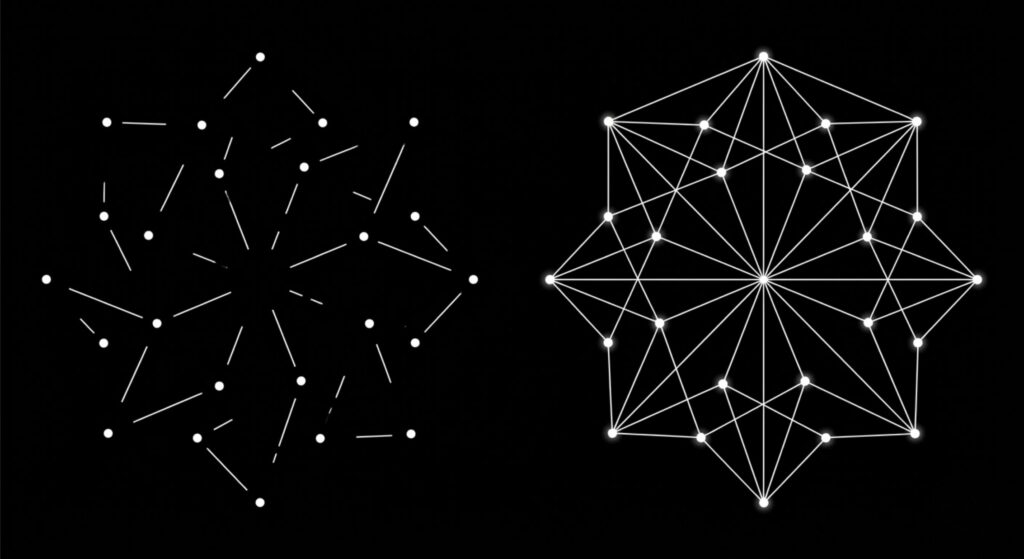
For a long time, I thought I was learning.
I was reading constantly. Philosophy, physics, psychology, self-help, history. I had notes, highlights and summaries. I could talk about Stoicism at a dinner table. I could explain the concept of entropy. I could quote Marcus Aurelius from memory.
And yet — nothing was changing.
My anxiety was still there. My decision-making was still reactive. I still froze in the same situations, still overthought the same problems, and still responded emotionally when I’d promised myself I wouldn’t.
I had all this information. And I was exactly the same person.
It took me a while to understand what was actually happening. I wasn’t learning. I was collecting. And those two things are not the same.
The Illusion of Knowing
There is a particular kind of self-deception that happens to people who read a lot.
You encounter an idea. It resonates. You feel a small rush — the feeling of getting it. You remember the sentence, maybe the chapter. You file it somewhere in your mind under “things I know”. And then you move on to the next idea.
What you’ve done is acquired familiarity. You’ve encountered the idea before. You can recognise it. You can repeat it.
But you haven’t understood it.
The difference sounds subtle. It isn’t.
Familiarity is passive. You’ve seen the idea. Understanding is structural — it means the idea has changed something in the architecture of how you think. It means the idea is now inside your processing, not just stored in your memory.
Here’s a simple test: can you apply the idea under pressure, without thinking about it? Not recall it — apply it. Automatically. In the moment when it actually matters.
If not, you know it. You don’t understand it.
What I Noticed in Physics
When I was studying physics, there was a clear difference between students who had memorised the formulas and students who had understood the principles.
The first group could solve problems they’d seen before. Give them a new angle, a different setup, a problem that looked slightly unfamiliar — and they’d freeze. They’d flip through mental notes looking for the right formula to match.
The second group would sit quietly for a moment, strip the problem down to what was actually happening physically, and build their way toward the answer. They didn’t need to remember — they could reconstruct.
That second group understood. The first group knew.
The difference wasn’t intelligence. It was depth of engagement with the material. It was whether they had stopped at recognition or pushed through to genuine comprehension.
I carried that observation with me long after I left physics. And eventually I realised the same thing was happening in how I was reading philosophy.
The Gap That Costs You
Most bad decisions don’t come from not knowing the right answer.
Most bad decisions come from knowing something intellectually and still not being able to act on it when it matters.
You know anger is unproductive. You get angry anyway.
You know consistency matters more than intensity. You still try to sprint and burn out.
You know that most of what you worry about won’t happen. You still lie awake at 2am.
The knowledge is there. The understanding isn’t. There’s a gap between what you know and what governs your actual behaviour, and that gap is exactly where your life gets stuck.
Marcus Aurelius wrote about this directly. He didn’t write Meditations as a book for other people. He wrote it as instructions to himself—reminders he needed to come back to because he hadn’t fully integrated them yet. He knew things. He was still working toward understanding them. And he was one of the most philosophically developed people in recorded history.
That should tell you something about how long this process actually takes.
How Understanding Actually Builds
So what does it take to move from knowing to understanding?
I’ve thought about this for a long time, and I think it comes down to three things.
First: friction.
Understanding is built through resistance, not ease. When you read something and immediately agree with it, you tend to absorb it passively. When you read something and push back, question it, try to break it, ask why this is true and under what conditions does it fail — you’re forced to engage at a deeper level.
The discomfort of not being sure is actually the feeling of understanding forming. If everything you read feels immediately obvious, you’re probably not thinking hard enough.
Second: apply before you feel ready.
Most people wait until they fully understand something before trying to use it. But understanding doesn’t fully form until it meets real conditions. You need to take the incomplete idea into an actual situation — a conversation, a decision, a moment of stress — and see what happens.
It will fail at first. That failure is information. That’s the gap between your model and reality showing itself. Each time you adjust, the understanding deepens.
This is why reading alone never changes behaviour. Reading builds a model. Application tests it. The gap between them is where real learning happens.
Third: returning to the same idea many times.
Not many different ideas at once. The same idea many times.
There are books I’ve read three, four, or five times. Each time I understand something I missed before. Not because the words changed — because I changed. My experience gave me new context that the idea could attach to.
Meditations is not a book you read once. Neither is the Enchiridion. Neither, frankly, is any book that contains a genuinely important idea. If you read it once and put it down, you got the outline. You didn’t get the substance.
The Practical Difference
Here’s what understanding looks like in practice, as opposed to knowing.
When you know that clarity matters more than motivation, you’ll say it. Maybe you’ll write it down. Maybe you’ll tell someone else.
When you understand it, you’ll stop trying to motivate yourself at all. You won’t wait to feel ready. You’ll build structure around your work so that motivation becomes irrelevant. The behavior changes — automatically, without effort — because the operating logic underneath has shifted.
That’s the test. Not whether you can articulate it. Whether it’s changed what you do without you having to consciously remember it.
Where I Am Now
I still catch myself collecting ideas instead of understanding them.
It’s easier to read the next thing than to sit with one idea long enough to actually integrate it. The dopamine hit of encountering something new is faster than the slow work of genuine comprehension.
But I’ve learnt to notice the difference now. When I read something and feel that rush of ‘I get it‘, I’ve learned to be suspicious. That feeling is often the beginning of the process, not the end.
Real understanding is quieter. It doesn’t announce itself. You notice it later, when you’re in the middle of something hard, and you realise you responded differently than you used to — without having to think about it.
That’s when you know you understood something.
Not when you can explain it.
When you no longer need to.
If this resonated, the next essay worth reading is → Stoicism is not emotional suppression. → First principles: how a physicist thinks about life
Leave a Reply